
Songwriting for Therapy and Creativity
Songwriting is for anyone and everyone. "But Alma," you say, "I don't have the first idea about how to write a song!" Well, that's okay because I do, and I got you. Let's collaborate.
Why Songwriting?
Do you have feels you don’t quite know what to do with?
Are you frustrated because you have words and a melody in your head but have no idea how to get them out of your head and into the world?
Do you have an idea that you think somebody oughta write a song about?
Do you have a burning, aching need for self-expression and don’t know where to start?
I could go on. And on. But maybe you resonate with some of those questions, and well, there’s your answer. You need songwriting because it is a way to process feelings, put ideas into the world, and satisfy a need to express yourself emotionally.
We’ve all heard the songs on the radio, the ones we say, “Oh, that’s about his divorce from her,” or “That’s about how he cheated on her and she dumped his sorry ass,” and yeah, songwriters frequently use songwriting as a way to deal with loss and pain. So why not you?
It’s a wonderful outlet because it uses so many processing centers of the brain at one time. Language, math, rhythm, imagery, movement, abstract reasoning … Music educators say, and rightly so, that music education is like a full-body workout for the brain – it’s tactile, it’s active, it’s creative, it’s emotional, and it’s empowering.
My Life in Songwriting
I wrote my first song at 8 years old. It never occurred to me that little me writing a song wasn’t a perfectly fine thing to do. I knew that folk songs (and most pop songs) have verses and choruses; I knew (somehow, possibly either by osmosis or from past-life memories, though I do have memories of my dad teaching me about tonic, sub-dominant, dominant, and relative minor from a very young age) that if I’m playing in the key of D, that D, G and A go together. I knew how to play all of those chords. I had an idea that I thought needed to be a song, so I wrote it.
And since that fateful day sitting on the front steps of the house I grew up in, I have written probably around 500 more songs. If you want to hear some of my music, check out my Substack (Musings of a Sound Medicine Woman).
And after writing my way out of a marriage that didn’t fit me, and the loss of my dad and too many other friends, and the frustrations of being a human in this particular skin in this particular world, I have come to a point where I am writing about the exhilaration of just being alive and human; watching birds, listening to trees, finding peace and healing close to or in water. And I have learned to get pissed off about bigger things than my own wild and fleeting life. Songs help you do that, perhaps more than anything. Yet another reason you need songwriting – it helps connect you with many somethings that are bigger than either of us.
So, how's it work?
Songwriting for Therapy
When we have stuck emotions to process, songwriting can help loosen things up by, as stated above, using multiple processing centers at one time, causing the neocortex to light up, bringing higher perspectives and a sense of calm and accomplishment. When you hear your song out in the air for the first time, you just can’t stop grinning. “We made that!” We sure did!
We book two solid hours so we can chat through what’s going on before we jump into the creative part. We need to draw a roadmap: what’s going on, how does it feel, how are you currently dealing with it, and where do you think it’s going.
Here’s where it gets just a touch … eldritch. Because I then say, “How do you want this to resolve? What do you want to happen?” And that, dear reader, is the ending we write. Using words and emotions and rhythm and melody and harmony, we put the resolution you want out into the world and tell the Great Wahoonie in the Sky to make it so.
You’d be amazed how many songs come true.
Songwriting for Creativity
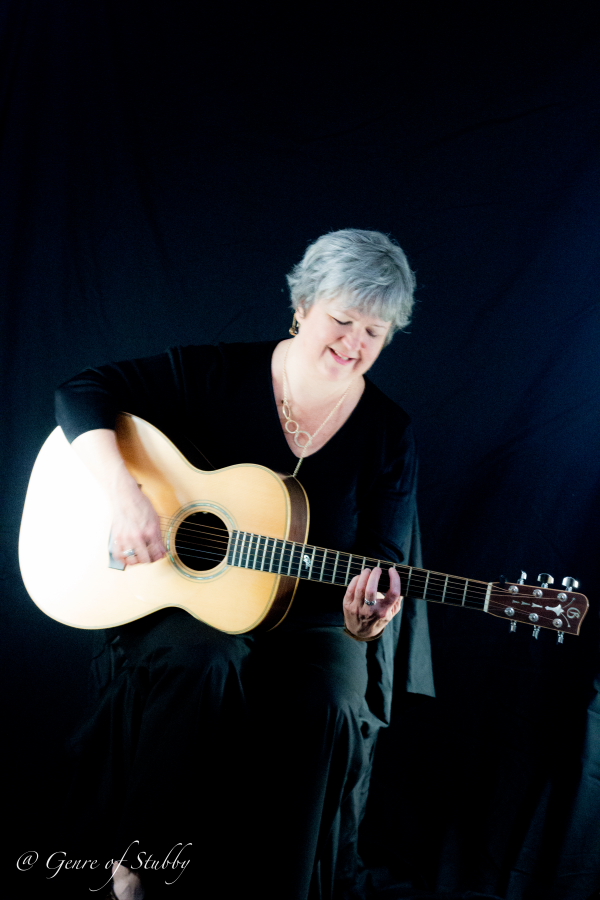
The Extra Mile
What happens next? What do we do with it once it’s a real song?
I have all the crazy-pants recording gear I need to record the song, and can even add a few extra touches like background vocals (or as the cool kids say, BGVs) and maybe a little guitar solo just to round things out. It won’t be a full studio production, but it will be the essence of the song, and we can talk about taking it to the next level if you want to do that. I know peeps who can make your song into a full, glorious production for a hot fistful of dollars. Easy.
"But Alma, I'm not sure I can justify spending money on music. I'm not a musician."
I’m so glad you brought that up!
How much is your brain worth to you? Making music engages a whole lotta real estate in the brain, akin to a full body workout. Musicians are using their auditory cortex (and the entire, huge, processing path that leads to it) to listen to what they and any others around them are playing or singing; they use their visual processing center to read music or lyrics; they use their language processing center to write music or lyrics; they use their hippocampus, amygdala, and limbic system to engage deep emotions; they use their motor cortex to control fingers and vocal acuity; and when musicians are playing or working together, their brainwaves sync up in an almost meditative state, creating a “hive mind” that is sometimes known as “the lock in.”
Singing specifically strengthens and tones the entire vascular system, especially the diaphragm, leading to better oxygen absorption, leading to a clearer mind.
Songwriting fosters all of the above, plus unique bonding and trust between participants. We learn to trust that we both have valuable ideas, and that resolving differences in opinion is just going to make the song better. Bonus: learning to resolve a low-stakes difference of opinion with a songwriting partner teaches you how to approach other conflicts in your home and work life.
But lets talk hobbies. How much does the average American spend on hobbies every month? According to a few different demographic sources, around $100 a month.
Songwriting sessions with me are in that exact ballpark, and if you take into account all the health benefits, including a full-body workout for your brain, you kinda can’t afford not to do this.
"But what if my songs are just terrible?"
Okay first of all, you’re writing with me, and I know what I’m doing. I can offer you some suggestions about squishing words around, about word choices (conversational songs are just the best; why would you sing it if you wouldn’t say it?), and I can really help with melody and feel and groove (I am a groovinator), so what you end up with is a cool, catchy, easy-with-the-earworm song that you want everyone to hear.
I’m not going to let it be terrible. And if it comes from your heart, it can’t be terrible. Oof, that sounds cheesy, but it’s really true.
May I rant a moment? May I? Oh, thank you. I promise it won’t be long, and it will be totally worth it. We have been horribly brainwashed by the entertainment industry to think that any musical sound we attempt must be perfect lest we incur the wrath and ridicule of all the naysaying naysayers with their overly critical bullshit opinions. We don’t want Simon Wossname from the UK smirking at us and telling us we’re just terrible and should go work at a garbage dump because that’s all our music is worth. Ahem: he and all of his ilk can, if you’ll pardon my Klatchian, fuck right off. All the way.
Because music, above all else, should be a source of joy, satisfaction, and dare I say it, fun. It doesn’t have to be perfect. And it really, really doesn’t have to be marketable (she says with a shudder). At its best, music connects people and allows us to feel like part of something bigger than us for a little while, and that’s a very important thing to feel.
Rant over.
One hour or two?
There are two options in the scheduler, a one hour session and a two hour session. Which one do you need? Well … that depends.
If you try a songwriting session and find it helpful, empowering, fun, satisfying, and enlivening, you might want to do regular sessions once or twice a month. You are more than welcome to book the two hour blocks of course, but if you are making this a regular practice, and you’re getting the hang of how it goes, one hour will be plenty to get some good work done. Songs will wait for you once you have started them, and in fact, sometimes simmering for a couple weeks while you think, hum, tweak words, dream about them, and figure out how you really want them to end, can be helpful and rewarding. One hour is plenty of time for that kind of a session.
The two hour sessions are usually more of a once-in-a-while thing, either more dramatically therapeutic, or purely creative. You have a song in your head and you need to get it out. We should be able to get it down in two hours. If it’s a deeper dive into therapeutic writing you are looking for, this might also be an occasional venture.
It is often helpful for a first session to book the longer one, see how it goes, and then having a better feel for whether it’s going to be helpful for you, book a series of one hour appointments once or twice a month.
Your brain is worth it.
One hour therapeutic songwriting: $75
Two hours therapeutic/creative songwriting: $125
Many of SoundWorks services are available at Pay-What-You-Can pricing, and if the published cost of any of our sessions is a deterrent to you or beyond your current capacity, we will work with you on price. We want to work with the people that need our help. Period.